.png)
R U OK? How to Really Connect with Children and Teens

September brings with it R U OK? Day, which is a wonderful reminder that asking someone how they are feeling can be the beginning of an important conversation. But when it comes to children and teenagers, simply asking, “Are you OK?” doesn't always result in a forthcoming answer.
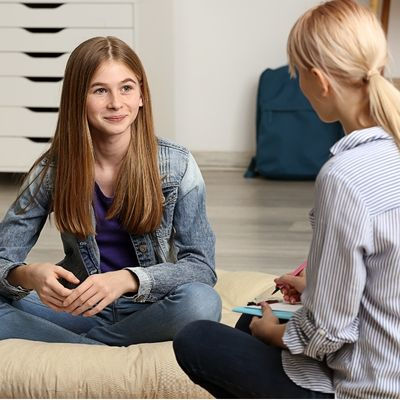
Sometimes we need to slow down, create space and find different ways to connect.
Children and teenagers may not always have the words to describe what is happening inside them. They might worry about getting into trouble, upsetting us, being judged, or simply not know how to explain what they are feeling. And sometimes, particularly for teenagers, a direct question can feel more like an interrogation than an invitation to talk!
Connecting with young people is therefore less about finding the perfect question and more about creating a relationship where they know they can come to us — when life is going well, and when it isn't.
Connection comes before conversation
One of the most important things we can do is build connection into everyday life, rather than waiting until we are concerned about a child's wellbeing.
Small moments matter.
Sitting together at dinner. Walking the dog. Driving to school. Playing a game. Cooking together. Watching a movie. Going for a coffee. Sitting on the end of their bed at night. These ordinary moments create opportunities for connection without the pressure of having a serious conversation.
For teenagers especially, talking side-by-side can sometimes feel much easier than sitting face-to-face. A car trip, walk or shared activity can provide just enough space for conversation to happen naturally.
We don't always need to ask big questions. Sometimes simply being present and interested in their world is enough to open the door.
Ask questions that invite, rather than demand
“Are you OK?” is an important question, but it is also very easy to answer with a quick
“Yeah, I'm fine.”
Instead, try questions that are a little more open-ended:
• “How have things been going lately?”
• “What's been the best part of your week?”
• “Has anything been bothering you?”
• “What's been taking up most of your thoughts lately?”
• “You seem a little quieter than usual. How are you going?”
• “What's been making you happy lately?”
• “Is there anything you've been finding difficult?”
• “Do you want to tell me about it, or would you rather just hang out for a while?”
For younger children, questions can be even simpler:
“What was one good thing and one tricky thing about today?”
Or try using a scale:
“If 1 is having a really hard day and 10 is feeling fantastic, where are you today?”
There is no need to immediately solve whatever they tell us. The first goal is simply to understand.
Listen more than you talk
When a child finally opens up, it can be tempting to jump in with advice.
We might say:
“Don't worry about it.”
“You'll be fine.”
“Just ignore them.”
“Why didn't you tell the teacher?”
“If I were you, I'd…”
Our intentions are usually good. We want to make things better.
But sometimes what a young person needs most is to feel heard.
Try responding with curiosity instead:
“That sounds really difficult.”
“I can understand why you'd feel that way.”
“Tell me a bit more about what happened.”
“What do you think you need right now?”
Listening doesn't mean agreeing with everything a child says. It means giving them the experience of being taken seriously. When children learn that their feelings will be listened to rather than dismissed, they are more likely to keep talking.
Don't be afraid of difficult feelings
Children don't need us to remove every uncomfortable emotion from their lives.
Sadness, anger, disappointment, embarrassment, loneliness and anxiety are all part of being human. Rather than immediately trying to make these feelings disappear, we can help children develop the ability to recognise and sit with them.
We might say:
“It's OK to feel sad. I'm here with you.”
“That sounds like a really big feeling.”
“You don't have to figure it all out right now.”
“We can work through this together.”
This teaches an important message: feelings are something we can talk about, not something we have to hide.
Use their language
Children and teenagers don't necessarily talk about their emotional wellbeing using words such as “mental health”, “anxiety” or “stress”.
They might say:
“I can't be bothered.”
“Everything sucks.”
“I don't care.”
“I'm just tired.”
“School is so annoying.”
Or they may not say anything at all.
Pay attention to changes in behaviour as well as words. A young person who becomes unusually withdrawn, irritable, angry, tearful, secretive or disengaged may be communicating that something is going on, even if they don't have the words to explain it.
Rather than making assumptions, gently notice the change:
“I've noticed you've been spending more time by yourself lately. I just wanted to
check in and see how you're going.”
This communicates concern without judgement.
Sometimes talking isn't the best place to start
If a child doesn't want to talk, we don't necessarily have to force the conversation.
Connection can come first. Sit beside them. Make them something to eat.
Go for a drive. Play basketball. Walk to the shops. Watch their favourite show.
Send them a funny message. Give them a hug, if they are comfortable with that.
Sometimes the safest conversation is the one that doesn't feel like a conversation at all.
And we can leave the door open:
“You don't have to talk about it now. But if you ever do want to, I'm here.”
That message can be incredibly powerful.
Give them choices
Teenagers, in particular, can feel overwhelmed when adults take control of a difficult situation.
Instead of immediately deciding what should happen, try giving them some choice:
“Do you want me to listen, help you work out what to do, or just give you some
space?”
Or:
“Would you rather talk to me, someone at school, or another adult you trust?”
Giving young people some control can help them feel respected and can make difficult
conversations less threatening.
Talk about wellbeing when things are going well
We don't only need to talk about mental health when something is wrong.
We can regularly ask:
“What helps you feel better when you've had a hard day?”
“Who do you feel comfortable talking to?”
“What helps you feel calm?”
“What makes you feel like yourself?”
“What are you looking forward to?”
These conversations help children build their own emotional vocabulary and identify the people, activities and strategies that support their wellbeing.
Then, when life becomes difficult, they already have some experience talking about their feelings.
Remember: connection is built in the little moments
Perhaps the most important message of R U OK? Day is that checking in doesn't have to be complicated.
We don't need to have all the answers.
We don't need to be psychologists.
And we don't need to find the perfect words.
We simply need to be willing to notice, ask, listen and stay connected.
For our children and teenagers, knowing that there is an adult who will listen without immediately judging, fixing or dismissing their feelings can make a profound difference.
So this R U OK? Day, perhaps we can go beyond simply asking the question.
Let's create the kind of relationships where our children know that “Are you OK?” isn't a once-a-year question.
It's an invitation that is always open.
“I'm here. I care about you. You can talk to me — whenever you're ready.”
If you're worried about a young person
If a child or teenager tells you they are struggling, take them seriously and stay with the conversation. You don't have to solve everything yourself. Support from a GP, psychologist, school wellbeing professional or another trusted adult may be helpful.
Kids Helpline (1800 55 1800) also provides free, confidential counselling for young people, and parents and carers can also access support and information.


Comments